New Orleans
Secret InvasionNew Orleans moves from the backdrop of a student holiday to the center of an expanding emergency: its position beside the Mississippi River makes the city both a reported edge of the threat and the starting point for an organized search upriver.
Setting and Early Arrival
In the final week of summer break, four Florida State students—Kimmy, Daniel, Melissa, and Steve—spend four days in New Orleans before classes begin. Their itinerary is ordinary and deliberately pleasurable: regional food, nightlife, and the atmosphere of the Big Easy. They stay in the French Quarter, described as the city’s historic heart. Although hotels there cost more, the location puts shops, restaurants, and bars within walking distance. At this stage, New Orleans is presented as a compact destination for a brief vacation, its appeal measured in convenience and leisure.
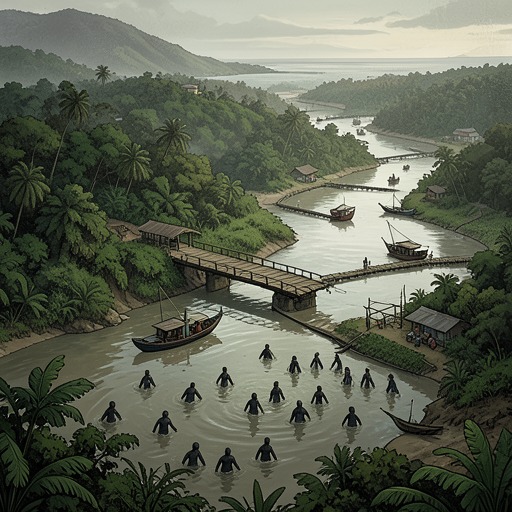
That civilian setting acquires a different weight when a sheriff reports that the news has covered a possible sligger attack at the edge of the Mississippi River in New Orleans. The report is presented as possible, not as a confirmed account. Yet it places the city on the emerging western front of the crisis, beyond the earlier concentration of coastal incidents. The location’s river connection becomes more consequential than the attractions that first defined it.
The Mississippi as a Route of Spread
The report changes how the investigators interpret the geography of the outbreak. Ron Tully and his colleagues hear that sliggers may be arriving along the Gulf of Mexico on coastal currents, moving east from somewhere farther west. Port Arthur, Texas, is the furthest-west point then reported, while New Orleans and the Mississippi River attract particular concern. The source of the spread remains uncertain; the proposed route is a working theory rather than a resolved explanation.
When asked whether to send his team to Texas, Ron Tully favors checking the Mississippi instead. The decision reflects a distinction between finding the westernmost reported site and investigating the route he considers most concerning. The proposed response divides forces across the widening search: one third is to go to Port Arthur, another third to continue west from their position in Florida, and the final third to reach the Mississippi promptly and follow the creatures’ trail upriver. New Orleans thus serves as more than a point on a map. It becomes the place from which a river-focused line of investigation can proceed.
A Base for the Search
Ron Tully’s team reaches the city by taking Highway 10 across the Inner Harbor Canal. From the crest of the bridge, New Orleans appears to the left, its downtown skyline marked by two dozen tall buildings. The view establishes the urban destination before the team enters the military operation already gathering there. The National Guard has arrived the previous night and established its base inside a convention-center building beside the riverside port.
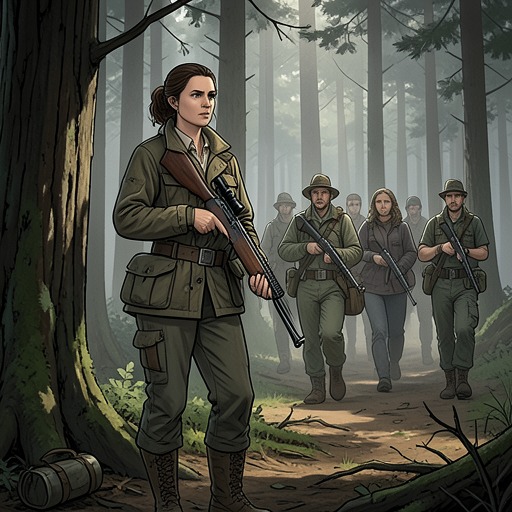
After checking in at the Hilton Garden Inn and leaving their suitcases in two rooms, the investigators drive to the convention-center parking lot and introduce themselves to the military personnel. At the briefing, the Guard commander cautions troops to avoid the creatures’ toxic appendages and, following Denise Baddington’s warning, to kill them without explosives. The planned sweep runs from New Orleans up the Mississippi River; two other infantry divisions are to work toward the area from Florida and Texas. Ron Tully recognizes the deployment as the strategy he proposed and considers it the best available way to contain and eliminate the invasive species.
The Riverfront Operation
The search begins at the wharf, where the units spread out. Ron Tully’s team accompanies the sergeant’s squad upriver, while the New Orleans Police Department works alongside the Guard. Their assignments divide the terrain: Guard troops search the water’s edge, and police officers check culverts and concealed spaces farther from shore. The operation therefore treats the riverfront not as a single open boundary but as a connected set of places where the creatures might be found.
As they walk the river, Ron Tully explains what the team knows about the quarry. He warns the sergeant that the creatures are tenacious and do not go down easily, then advises him on destroying their bodies and collecting the remains. Those instructions make the city’s role practical as well as strategic: New Orleans is a staging area where knowledge gained in earlier encounters is passed to the troops who will search the river. Across these scenes, the city’s meaning changes without erasing its earlier character. The accessible French Quarter remains the setting of a holiday, but the port, wharf, and upstream route turn New Orleans into a coordination point for a broader campaign whose next evidence may lie beyond the city.